
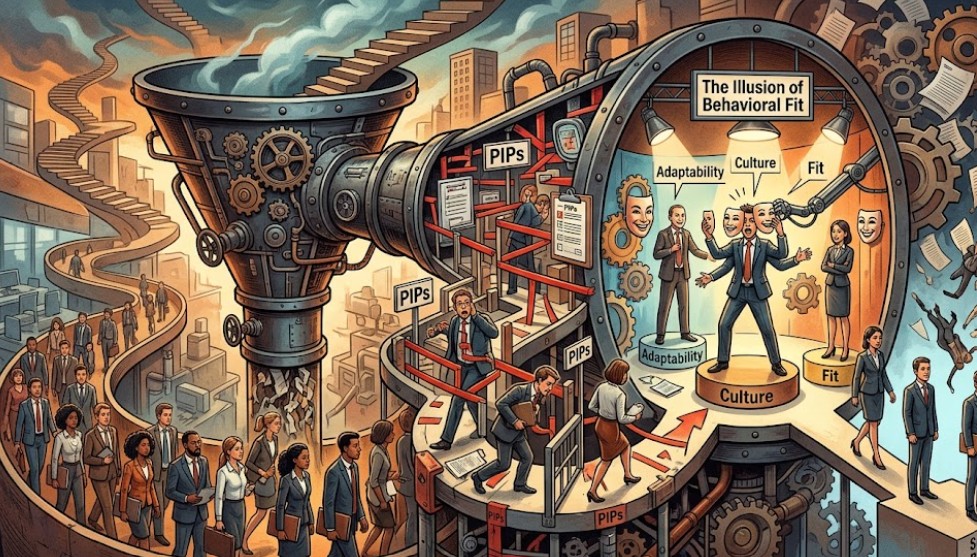
Every executive has been there. You review a candidate’s resume, and it’s flawless. They nailed the technical assessment, gave the right answers in the panel interview, and came with glowing references. Three months later, however, they are completely misaligned with the team, dragging down morale, and you find yourself quietly drafting a PIP (Performance Improvement Plan).
What went wrong? You checked for culture. You asked behavioral questions.
The harsh reality is that most companies are trapped in a hiring bottleneck. They are excellent at filtering for hard skills, but when it comes to assessing true behavioral fit, they are relying on an illusion.
1. The PIP as a Symptom, Not a Solution
When an employee ends up on a PIP, management usually frames it as a failure of execution or effort. But if you look closer, a massive percentage of PIPs have almost nothing to do with technical capability. Instead, they are the result of deep-seated behavioral friction:
- A brilliant engineer who refuses to document their code or collaborate with peers.
- A high-performing sales executive whose aggressive communication style alienates the product team.
- A manager who micro-manages their team because they cannot adapt to a high-trust, remote culture.
A PIP is merely the lagging indicator of a broken hiring process. It is the expensive, painful cleanup of a choice that should never have been made in the first place.
2. The Illusion of “Good Interviewing”
Why do we keep getting this wrong? Because candidates have cracked the code on standard interviewing.
In the age of LinkedIn advice, AI interview prep, and corporate transparency, behavioral questions like “Tell me about a time you managed conflict” no longer yield authentic answers. Candidates know exactly what hiring managers want to hear. They serve up polished, rehearsed narratives that project a perfect image of adaptability, emotional intelligence, and grit.
We think we are assessing behavioral fit, but we are actually just assessing audition skills. The charismatic candidate wins the job, while the candidate who might actually fit your operational reality gets passed over.
3. Deconstructing “True” Behavioral Fit
To break the bottleneck, organizations have to stop treating behavioral fit as a vague vibe check (“Would I want to grab a beer with this person?”) and start treating it as a hard operational metric.
True behavioral fit is the alignment between a candidate’s natural work style and the unvarnished reality of your current day-to-day environment.
| Dimension | The Superficial Check | The Real Behavioral Fit |
| Pace | “Can you work in a fast-paced environment?” | How do they react when priorities change three times in one week? |
| Autonomy | “Are you a self-starter?” | Can they execute without a clear blueprint, or do they need structured oversight? |
| Communication | “Are you a team player?” | How do they deliver critical, uncomfortable feedback to a superior? |
4. Breaking the Bottleneck
Moving away from the PIP cycle requires a fundamental shift in how we interview.
Ditch the Theoretical; Use Friction Testing
Instead of asking how someone would handle a situation, put them in a simulation that mimics the exact cultural friction points of your company. If your company is highly collaborative and requires endless consensus, give them a case study where they must build consensus under a tight deadline. If you are a chaotic, hyper-growth startup, give them an ambiguous prompt with missing data and see if they freeze or pivot.
Interview for the “Dark Side”
Every positive behavioral trait has a shadow side. A highly analytical, detail-oriented person might struggle with speed. A visionary, fast-moving executor might leave a trail of unorganized chaos behind them. Stop looking for flawless candidates. Look for candidates whose “shadow side” is something your organization can actually tolerate and support.
The Bottom Line
The bottleneck in modern talent acquisition isn’t a lack of resumes or a shortage of technical talent. It is the inability to see past the interview mask.
Until companies stop treating behavioral fit as a secondary checkbox, they will continue to waste time, money, and team morale on the back-end trying to fix misalignments through PIPs. By treating behavioral alignment with the same rigor as a technical coding test or a financial business case, you don’t just hire faster—you hire permanently.
Leave a Reply