
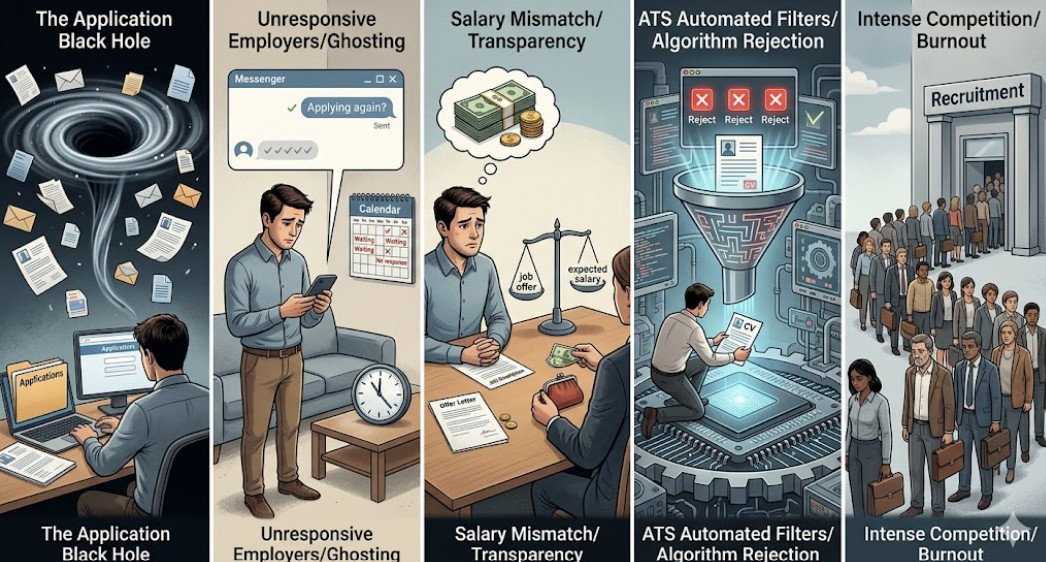
1. The Job Application “Black Hole” (Lack of Feedback)
The single biggest complaint from candidates is the deafening silence following interviews or assessments. Many companies invest heavily in automated screening platforms but fail to humanize their follow-ups. Going through multiple rounds, investing time and energy, and then simply never receiving an official “no” breeds anxiety and leaves candidates feeling invisible.
2. The AI Screen Barrier (ATS Systems)
Nowadays, resumes are read by bots (Applicant Tracking Systems) long before they ever reach a human being. If a resume doesn’t contain the exact keywords of the job description or the ideal formatting, it gets automatically weeded out. Candidates feel like they have to “hack” an algorithm rather than showcase their actual skills, making the entire process feel frustrating and mechanical.
3. Unrealistic Requirements for Entry-Level Roles
It’s the job market’s favorite irony: “Junior” or entry-level positions that demand years of prior experience, mastery of advanced tools, and fluency in multiple languages. This creates massive frustration for young professionals and career switchers, who find themselves trapped in the classic paradox: “I need experience to get a job, but I need a job to get experience.”
4. Long, Exhausting Hiring Processes
It is not uncommon to encounter 5, 6, or even more interview rounds. These often include HR screenings, hiring manager interviews, executive syncs, logic tests, group dynamics, and complex take-home assignments (which frequently feel like free consulting). This painfully slow pace drains the energy of candidates, who must balance this marathon with bills that keep coming due.
5. Emotional Burnout and Imposter Syndrome
Constant rejection—or worse, a total lack of response—takes a direct toll on self-esteem. Prolonged unemployment leads professionals to question their own worth and technical capabilities. Staying optimistic and maintaining your mental health while dealing with financial pressure is, without a doubt, one of the most painful aspects of this journey.
Note: If you are currently going through this or mentoring someone who is, please know that these struggles say a lot more about the structural flaws of modern recruiting than they do about a candidate’s competence.
Leave a Reply